ShareThis

Showing posts with label marketing. Show all posts

Sunday, July 12, 2015

Get Started with Social Selling

Social Selling
What's the one number you need to know about social media and social networking? 25.

25% of time spent on the internet today is spent on social media.

Nearly 25% of Americans use social networking sites several times per day.

And more than 25% of the people in the world have a social media account. THE WORLD.

So why aren't you trying to use social media to generate leads and nurture prospects? Because, obviously, you should be. Businesses everywhere, from small firms to multinational corporations are using social media for marketing, advertising and brand awareness. But some salespeople have been slow to adopt for direct sales purposes. Understandably, it can be a bit overwhelming. Especially for someone unfamiliar with social media. But it's really just another way to communicate -- just like email (and the telephone before that). So here are some tips to help you get started with social selling:

Get Started with Social Selling by:
  1. Create (and use) professional social media profiles on Twitter and LinkedIn.
  2. Optimize social media profiles.
  3. Seek referrals on LinkedIn by giving recommendations & endorsing others.
  4. Follow at least 100 new people (20x per day) on Twitter including:
    • Industry Thought Leaders
    • Prospects
    • Customers 
    • Sales Gurus
    • Set up Google Alerts for competitors/prospects/customers/industry terms.
    • Post at least 3x per week about:
      • Industry News
      • Prospects/Customers
      • Competitors
      • Thought Leaders
      • Photos when Travelling
      • Sales Best Practices
      • Personal Interests (20% of time is okay)
    • Join industry-specific groups on LinkedIn.
    • Add LinkedIn connector to Outlook on laptop.
    • Download LinkedIn Connected app for mobile phone.
    • Connect Salesforce account to Twitter.
    • Subscribe to industry and thought leadership blogs.
    • Subscribe to LinkedIn Sales Navigator (optional).
    • Blog (optional).

    New Business Sales Daily Social Selling Routine Checklist:
    1. Open LinkedIn and Twitter in browser tab (don’t close – just like email).
    2. Find content to share.
    3. Share general content on social networks.
    4. Share specific content with prospects & customers on Twitter & LinkedIn (just like you would via email).
    5. Look at who liked, retweeted, favorited or commented on your posts on LinkedIn & Twitter.
    6. Review LinkedIn alerts.
    7. Check on who’s viewed your LinkedIn profile.
    8. Send personalized connection request to any prospects who looked at your LinkedIn profile.
    9. Send personalized connection requests to any prospects you emailed thru Outlook yesterday.
    10. Send personalized connection requests to people who engaged with your LinkedIn posts.
    11. Follow people who engaged with your tweets.
    12. Follow people who followed you on Twitter.
    13. Respond to messages (just like you would email).

    Top Prospect Weekly Social Selling Routine Checklist:
    1. Open LinkedIn and Twitter in browser tab (don’t close – just like email).
    2. Find content specifically for/about top prospects.
    3. Share content specifically with top prospect (via email and social media).
    4. Like and Retweet posts from top prospects.

    Social Retention/Growth Weekly Routine Checklist:
    1. Open LinkedIn and Twitter in browser tab (don’t close – just like email).
    2. Find content specifically for/about current customers.
    3. Share content specifically with current customers (via email and social media).
    4. Like and Retweet posts from current customers.

    Have other tips for salespeople looking to use social media to start selling? Leave them in the comments below:

    Sunday, May 31, 2015

    Top 10 SEO tips for 1st-page Google search results


    Technically SEO, or Search Engine Optimization, is about improving your website's page ranking in search engine results across all search engines, including Google, Bing, Yahoo!, Ask, DuckDuckGo, Dogpile, etc. But when it comes down to it, SEO is really about increasing the overall traffic to your website via Google organic search (as opposed to paid search, SEM, or Search Engine Marketing).

    Google truly is really the only search engine that matters -- with about 66% of the search traffic in the U.S. and roughly 90% of the share everywhere else in the world. And while the #1 listing in Google search results gets 33% of all organic search traffic, being on the first page is most important, as 92% of all traffic comes from those first 10 results. But even when you're on that first page, you need to stand out.

    Here are ten tips to help you get on the first page of organic Google search results and then get clicked:
    1. Vanity URLs are key to SEO. Be sure the URL of your website is either the name of your company or, if you're lucky enough to own these URLs, the name of your product/content i.e. ESPN would probably love to own the URL sports.com or Netflix own the URL movies.com. Today these are brand names that are likely "Googled" more often than their product/content terms themselves. But when they were up-and-coming companies, this would have dramatically improved SEO.
    2. Meta Tags are the keywords in the header code of your website used by search engines to categorize your website and determine relevance to organic searches. Today, Meta tags or keywords aren't nearly as important as they were in 2008, or even 2012, in fact Google and Bing don't even look at them anymore, but other search engines still do, so don't listen to those anti-meta-tag soap boxers and completely ignore them. You should still use them! Your Meta tags should be very specific to what your website is about -- don't be too general. For example, use terms like "used golf clubs, preowned golf clubs, cheap golf gear" versus "golf, clubs, used." But do some research using websites like Google Trends, http://www.keywordspy.com/ or http://www.wordtracker.com/ to find the most popular search queries related to your content.
    3. Meta Titles are the words that appear as links in search engine results. These words also appear in the top of your browser or in the browser tab when you are on that page, and is the default text that appears when you bookmark a webpage. Meta titles should be no longer than 50 characters in length to be sure the entire title can be read in Google search results. If you go any longer than that, I'd only suggest it being the name of your company/website at the end of your Meta title. Write Meta titles for humans but keep robots in mind -- meaning, write Meta titles that are one readable thought that can be easily understood by a person, but use as many keywords as you can without keyword stuffing.
    4. Meta Descriptions are the 160 character descriptions of each page of your website that appear in search engine results. Many website creation tools and content management systems let you write Meta descriptions that are longer than 160 characters, but don't bother. Search engines will only display the first 160 characters. Use a tool like http://www.lettercount.com/ to be sure you're under that limit. Technically, Meta descriptions don't help your page rankings in search engines, but it will definitely affect your click-through rate on search results pages. Your Meta description should get straight to the point. Be direct. And be concise. 
    5. Page Content is actually THE MOST IMPORTANT factor when it comes to SEO. Make sure the copy on your website is loaded with as many keywords and top searched terms as possible without looking spammy. Remember, someone has to be able to read it and make sense of it. And definitely don't try and trick Google by putting a bunch of text in white font on a white background in the footer of your website. Larry Page and Sergey Brin didn't become the 5th richest people in the world by being idiots.
    6. Alt Tags are the invisible image descriptions hidden in the HTML that describe what your image, photo, icon, or picture is about. Use alt tags to not only describe the image, but also describe the other content on the page. But keep it short! And definitely don't keyword stuff! Search engine robots are intelligent enough now to know if you're trying to game the system and it will actually negatively affect your SEO. Did you know? Alt tags are read aloud to blind people who visit your website in accessibility modes.
    7. Inbound Links are the #1 factor when Google is determining your Page Rank. They are extremely important, but hard to come by. Inbound Links are links from somewhere else on the internet that direct traffic to your website. Inbound Links are different from Reciprocal Links where a website links to you but you link back their website as well -- which is why Inbound Links are hard to come by. The best way to get inbound links to your website is through content marketing. Create interesting content that's relative to your target audience and your target audience will start linking to you. Similarly...
    8. Outbound Links are important to SEO as well. I know it seems weird, but pointing your traffic to other resources that are similar to yours will create trust with your audience, improve Google related:searches, and increase Google Page Rank. But don't use links farms! And don't overdue it! Internal linking to other pages within your own website (i.e. Wikipedia) is always better than driving traffic to external websites.
    9. Social Media, particularly Google+'s social search of Search Plus Your World (SPYW), is extremely important when it comes to SEO. Today, the first page of organic search is often filled with links from people in your Google+ Circles, followed by a Facebook page, Twitter profile, and other social media links -- sometimes even before a website's homepage appears! Make sure you have a Google+ page, Facebook page, Twitter account, LinkedIn page, and YouTube account...
    10. Videos are almost 50 times more likely to appear on the first page of Google search results than regular web pages. Create a video -- even if it's just a 30-second selfie of you talking to the camera -- and upload it directly to YouTube (owned by Google). You'll almost instantly see your video views increase right along with your webpage traffic.

    Got questions? Or other tips? Add them in the comments below:

    Sunday, August 18, 2013

    Marketing = Creativity + Data


    I've always been creative (every child is). But I've also always loved math (yes, math). In 6th grade I actually tallied up the stat lines for our fantasy basketball league myself, using a newspaper (pre-internet) and a TI-85 calculator (pre-iPhone). Then in college, I even chose my first major based off my creative skills and love for math. But after two years at the Knowlton School of Architecture at The Ohio State University, I realized that it was actually too design based and lacking the engineering I had expected. I wanted more math. I wanted more data. That's when I found the perfect career -- Marketing.

    Marketing and advertising have always been stereo-typically creative fields (i.e. Mad Men's Creative Director, Don Draper). But today, great marketers are more than just creatives, they're analytical as well. Today, marketers have to thoroughly enjoy digging into the data and tracking KPIs (Key Performance Indicators) on a weekly basis. In order to be a successful marketer in the digital age, you need to track campaign effectiveness from the top of the funnel through the sale.

    And now, there's a new marketing buzzword sweeping the nation: Big Data. According to smartdatacollective.com, "big data refers to our ability to collect and analyze the vast amounts of data we are now generating in the world." Now, with big data, marketers can start analyzing and utilizing information earlier in the sales process, before suspects even enter the funnel.

    For example, have you read the story about how Target figured out a teen girl was pregnant before her father did? Or how President Obama's 2012 campaign used big data to rally individual voters? Both are examples of how "marketers" analyzed the vast amounts of data available to them to target specific audiences and then persuade them to act in accordance to their organization's goal. And both are examples of how, today, marketing isn't just about being creative. Today:

    Marketing = Creativity + Data

    Saturday, May 4, 2013

    The best Twitterers are Marketers

    #beliebers


    There's no denying, the best accounts to follow on Twitter have the most followers -- that's why they have the most followers (and if you disagree, please, keep reading). But what you don't realize, is that every one of those people are selling you something. It's true -- even if it's not obvious.

    Let's start with just the people YOU follow. There are your friends, your family, and everyone else. An everyone else is selling you something.

    Take the list of the top 10 people on Twitter with the most followers (this does not include corporate brands, which, obviously, are trying to sell you something):
    1. Justin Bieber: @justinbieber - 39,673,026 followers
    2. Lady Gaga: @ladygaga - 37,703,992
    3. Katy Perry: @katyperry - 37,075,529
    4. Barack Obama: @BarackObama - 31,982,994
    5. Rihanna: @rihanna - 29,756,835
    6. Taylor Swift: @taylorswift13 - 28,329,970
    7. Britney Spears: @britneyspears - 27,372,412
    8. Justin Timberlake: @jtimberlake - 20,778,620
    9. Shakira: @shakira - 20,773,482
    10. Ellen DeGeneres: @TheEllenShow - 19,301,628
    They're all trying to sell you something -- mostly music. And even when it's not as obvious as that, they're still selling you on the idea of themselves as musicians, politicians, or celebrities. Their selling their own personal brand.

    And then there are the corporate brands. Common sense tells you they are trying to sell you something, but you wouldn't know it by reading their tweets. There is no mention of "Buy this" or "Try that" -- just simple content marketing and engaging conversations. And that's why they're the best brands on Twitter:
    1. YouTube: @YouTube - 10,259,054 followers
    2. Twitter: @twitter - 8,856,790
    3. Twitter en español: @twitter_es - 8,480,198
    4. CNN Breaking News: @cnnbrk - 6,923,605
    5. TwitPic: @TwitPic - 6,615,838
    6. UberSocial: @UberSoc - 5,826,875
    7. The New York Times: @nytimes - 4,700,907
    8. NBA: @NBA - 4,525,421
    9. Google: @google - 4,465,778
    10. E! Online: @eonline - 4,267,255
    Brands and Twitter are all about content marketing. The best brands -- whether personal or corporate -- are the best content marketers. They post interesting tweets that are relevant to their followers. By doing so, they promote their brand. That's why they have the most followers. And that's why all the best Twitterers are marketers.

    Thursday, November 1, 2012

    Top 10 commercials of 2012


    The year's not over yet. But it's nearing quickly. Which means it will soon be time for best-of-the-year lists to appear on all your favorite magazines, shows, and blogs. And if you thought I fell off that wagon, you were wrong. I am, and will always be, a lister.

    My first top ten list in the series of "Best of 2012" is of TV commercials.

    There have been a lot of great ads this year -- from Charlie Sheen, Bud Light, and Doritos during the Super Bowl; through a younger, hipper award season; to the more traditional holiday favorites -- but only these ten made the list for 2012 (so far):

    1. The Dog Strikes Back (Volkswagen)

    2. Man's Best Friend (Suburu)

    3. Counts (Nike)

    4. Star Wars Fantasy Football (ESPN)

    5. iPad Mini Heart and Soul (Apple)

    6. Sousaphone (Hyundai)

    7. The Next Big Things (Samsung)

    8. Transactions (Acura)

    9. Accurate. Deadly. Dependable. (Hornady)

    10. Don't Tell Mom (Hyundai)

    Watch them all here along with some honorable mentions:


    Did I miss any? What's your favorite commercial of the year? Leave your suggestions in the comments below:

    Saturday, September 29, 2012

    Top 10 ways to connect with millennials


    If you're looking for a way to connect with the millennial generation, social networks are the best source to find those "kids" and build meaningful relationships with them. Try interacting with them via:
    1. Facebook: With over 1 billion active users and more than 42 million pages with 10 or more likes, Facebook is the perfect place to connect with MBAs. Your company/product/school should have its own Facebook page that millennials can “like” and get daily updates on relevant news and events. By creating an official Facebook page, you can easily reach a self-selected audience who is actually interested in what you have to say.
    2. Twitter: Twitter is a proven marketing tool and an effective outreach device. Many companies have a presence on Twitter. And some even have multiple accounts, including an entire product-oriented presence. Millennials are already using Twitter to communicate, research, promote and personally brand themselves – you should be doing the same for your company's/product's brand. Take a moment each day to tweet about something relevant or interesting.
    3. LinkedIn: Where Facebook is considered a more personal space, LinkedIn has been defined as the “professional” social network. Use LinkedIn to connect with working millennials with money to spend. You should not only create a LinkedIn group for your company's employees, but also create subgroups for each product's users/experts to better connect (and stay connected) with your customers.
    4. Google+: Google+ is the fastest growing social network ever, already with 90+ million users. And it’s critical to Google’s new “social” search algorithm. Create an customer-facing company “page” now and start adding your customers, users and fans to your “circles” (Google+ pages are different than personal accounts in that you can’t add people to your circles until they’ve added you). Once your Google+ page has been created you can advertise it to millennials just like any other social network.
    5. YouTube / Vimeo: Videos are 53 times more likely to appear in search than text webpages. So if you are trying to connect with millennials organically through search, YouTube might just the best way to do so. Need content ideas? Try helpful tips from users or how-to videos for your products.
    6. Blogs: You are probably already blogging, but if not, you should be! A blog is the easiest way to get information on the internet for your audiences to find. And comments on blogs are the easiest way to start a conversation with those audiences. If you don’t already have a blog built into your website, you can start one for free on Blogger or Wordpress. Then start posting any news or commentary that you think millennials might find interesting, relevant and timely. Your company's blog is also a great way to promote your new products to millennials doing research on the web.
    7. Instagram: This photo sharing network is an easy way to post a picture worth 1,000 words. Find the most artistic person with an iPhone or Droid in your office and create an account on Instagram for your company. Post pictures of goings-on around the office, product details, or people using your products to pique interest in your company. Instagram is the new Flickr.
    8. Pinterest: Pinterest is the hot new social network, and it’s dominated by women. Create some boards around “Women", “Fashion”, and “Style” to connect with the female millennials.
    9. Foursquare: Make sure your company is available for “Check Ins” on Foursquare. It’s an easy way for millennials to advertise for you by showing their friends where they've been and leaving tips for future visitors/customers.
    10. Tumblr: It’s the new way to blog. The best Tumblr blogs have a niche theme, so pick something simple like “Our Customers” or the newest internet meme and twist it to something your customers might find interesting or funny.
    For more information on connecting with the millennial generation, please contact me.

    Sunday, June 24, 2012

    John Carter (almost) flops. Marketing (still) to blame.


    Disney's marketing team is fully to blame for what was almost one of the biggest box office flops in film history, John Carter.

    Not only is John Carter a decent movie, it's a great movie. While the overall consensus of the film today is somewhat negative (52% on RottenTomatoes), early reviews built promising buzz. The negative reviews came later in its life. And I'm here to defend it from those bandwagon haters.

    Though I can agree the film is a little slow to start (yet needed for the payoff in the final scene), the ambitious alien adventure that ensues is truly action-packed and at-times hilarious. I didn't just NTN, I literally LOL'd at parts. It's a perfect blend of action, romance, science-fiction, comedy, aliens, heroes, and princesses. And, ironically, this fun-for-all-ages-damsel-in-distress story is what Disney's story-sellers failed to tell.


    From day one I was interested in John Carter, but I had done my research and already watched the complete Tim Riggins saga -- twice. Those who weren't yet Taylor Kitsch fans, and didn't know about  the Edgar Rice Burroughs' novels, still needed to be sold.

    Disney can only blame themselves for the near $200 million loss. Disney's former chairman Rich Ross (fired following the flop) couldn't have been more wrong when he said "the film failed to connect with audiences." Nobody even met John Carter, how could they connect? The empty theater seats were a direct result of Disney's inability to promote the film's premise to audiences.

    It's not just "John Carter" -- it's "John Carter: Princess of Mars." By changing the title of the film and not including "mars" or "princess" -- thereby removing both the sci-fi and romance from its very name -- most movie-goers just assumed it to be about some Star-Wars-Episode-2-like-desert-arena-monster-battle that Disney's marketing team became laser-focused on. So who can blame women and families for buying tickets to see "The Lorax" instead?

    But the real shame is that those of us who whole-heartedly enjoyed the delightfully-fun film and its three-dimensional special effects -- and there were plenty of us, 126 positive user reviews out of 163 on MetaCritic -- may never get the sequel, or the trilogy, we desire.

    Wednesday, May 30, 2012

    Just "new" it

    Just new it
    Please don't change it. Just "new" it.
    Everybody hates change (Facebook's user interface updates, Google's social search, McDonalds' new fry oil, Star Wars special edition) but everyone loves something "new" (Apple's new iPad, Wendy's fries with sea salt, Nolan's The Dark Knight). It's the key to product updates.

    But, honestly, there isn't any difference between a new product and a changed product. It's all in the packaging. Not the physical packaging, but the marketing.

    The way a product is branded by marketing will inevitably create the consumer perception of the product's update. If marketing can create a "new" perception of the product, like the always brilliant product marketers at Apple did with the iPad 3, consumers will buy in. It's much more difficult to sell a product that's just "changed."

    Just think about it. What are some other "new" products that were well-received by consumers, and some poorly-received product changes? Add them in the comments below or Tweet them at me @RyanPratt.

    Tuesday, January 31, 2012

    Rebranding in the 2010s: The Netflix slash Qwikster debacle


    I've experienced this myself -- when a company I worked for briefly split in two and became one company with two websites. It was a difficult decision, and even more difficult transition.

    There are the obvious complications that come with re-branding a business: new logos, new colors, new business cards, new letterheads, etc. These are the same problems transitioning companies have dealt with for years. But today there is so much more to worry about.

    Today, rebranding businesses have to consider the transitions in the digital world as well. 

    There's website domains. Is your URL available? Or how much is it going to cost you to purchase it from that squatter?

    There are SEO effects. Sure 401 redirects will combat a complete domain swap. But all the work you've done creating inbound links from other highly-ranked websites; all the research on META tags, keywords, and descriptions; and any positive effects you've received from social search (SPYW) is as worthless as having a Facebook page with zero "likes."

    Which leads me to the biggest issue -- and the one that eventually put an end to Netflix's rebranding fiasco -- is the question of what to do if your handle isn't available on the social networks?

    Just as there are domain squatters for URLs, there are Twitter and Facebook handle squatters. As soon as it becomes apparent any social network is the "next big thing" and opens itself up to business and companies, users sign up and sit on social network names. Heck, I'm not even squatting and I have 27 Twitter accounts and 13 Facebook usernames. But unlike URLs which have democratic companies monitoring and maintaing these domains (i.e. GoDaddy), social network handles are a ruleless wild west for name-squatting cowboys (and cowgirls).

    The moment Netflix announced they were rebranding their DVD mailing service as Qwikster people jumped on net and blew up search engines with the term "Qwikster" -- which inevitably lead them to find a foul-mouthed, pot-smoking Elmo who already owned the Twitter account for @Qwikster. It was major flaw in C-suite's plan for Netflix. Something you'd expect a company as successful as Netflix to have thought of. But they didn't. And they soon lost the quickdraw gun fight with Jason Castillo (aka @Qwikster) who's since cleaned up is act a bit -- changing his profile picture to a crest and washing his mouth out with soap -- but not before single-handedly putting an end (and some bad PR) to the Netflix / Qwikster debacle. And...


    Sunday, December 4, 2011

    All marketers fib


    Seth Godin recently retitled his book "All Marketers are Liars" to "All Marketers Tell Stories" -- but I think he was closer the first time around. He should have stuck with his gut on this one.

    The truth is, "all marketers fib." They don't necessarily tell full blown lies. And they're not just telling stories (because they are in fact trying to sell you something). But they are attempting to persuade in the most effective and engaging way. And most of the time, that includes a little white lie.

    So what is a "white lie" you ask? A "white lie" can be a manipulation of data, ghost written testimonial, skewed timelines, leading questions in a survey, or a simple confusion of correlation and causation. It happens all the time, in every industry, on every channel, in all facets of the function. And its not just the big name brands with big budgets, or the small-time companies trying to get a leg up on the competition.

    All marketers fib.

    Wednesday, November 23, 2011

    QR eye for the straight guy

    Do you know what a QR code is? Do you know what to do with one? Data suggests not.

    According to this infographic, just 52% of you have even heard of or seen a QR code, and only 26% have actually scanned one. I'll admit, I was part of that 74% until just last weekend.

    Last weekend I was the first of my friends to arrive at Happy Hour at a local Irish pub, Brazenhead, and while waiting for my friends and my Black & Tan I noticed the Heinz ketchup bottle had a QR code on it. I was bored, not yet drunk, yet slightly curious, so I decided to give it a try. If you didn't know, I am quite the technophile, and a marketer, but even I wasn't sure if I needed an app or if my phone's camera could somehow automagically take a picture of this "code" and actually tell me something. I quickly realized that couldn't be, but figured, most likely, that...

    There's an app for that.


    So I pulled out my iPhone, downloaded an app, and scanned this strange black-and-white square code-y thing.

    Despite the narrative this whole process took mere seconds, but just as quickly, I was disappointed. The "offer" had expired, the website 404'd, and the entire experience was ruined. Fortunately, my beer arrived soon thereafter, and I hadn't even thought about it again until now. Or QR codes for that matter. But it's a lesson to any marketer considering a QR code campaign. If even I, a technophilic marketing millennial, don't use these things unless extremely bored, sober, lonely, and it's literally right in front of my face:

    What's going to entice some random person scan one? 

    Wednesday, October 26, 2011

    Content is Queen, Conversation is King


    Content has stepped down from the marketing throne and handed the new sales crown to it's rightful owner -- conversation.

    For years, content was king. Content was the key to any successful website, service, product, or offer. Without content, you were just a salesman with a sales pitch. And that sales pitch was all-too-obvious to customers. An easy way around the cold calls and sell sheets was to create content that drove people into the funnel on their own. This funnel then filled with self-selecting interested customers -- if they liked your content they more than likely would like your offer -- who quickly moved through the funnel from lead to opportunity to sale.

    Creating interesting and relevant content WAS the easiest way to generate leads and drive sales.

    But now, conversation is king. Though content is still just as important as ever -- conversation is even more importanter than ever.

    Conversation is simple by definition. It's the act of having meaningful conversations with customers and prospects. And not just over the phone or in person at conferences, conversation now occurs online -- on social networks.

    The same social networks that once depended on interesting content for sharing and liking -- now need that content to generate interesting conversations. Without interesting conversations, your content and offer get lost amongst the clutter.

    Most social networks and search engines today depend on algorithms that are smart enough to not only find what's relevant, they also know what's interesting. Interesting content leads to interesting conversations. And without interesting conversations, you'll just roll down the feed and disappear like crap in a toilet. Don't create crap!

    Today, everyone is online. And everyone is creating content. Not everyone is generating interesting content that leads to interesting conversations. And therefor, you're not reaching everyone.

    The surest way to reach the masses today IS to create interesting content that leads to ongoing conversations which stays relevant longer.


    Today, conversation is king!

    Tuesday, October 18, 2011

    The personification of the marketer


    It has become glaringly obvious over the past few months that people do NOT want to be marketed to. They hate it. They call it SPAM.

    SPAM is defined by Wikipedia as "the use of electronic messaging systems (including most broadcast media, digital delivery systems) to send unsolicited bulk messages indiscriminately." And those who create this electronic spam is defined as a spammer.

    But today, consumers define any advertisement that doesn't openly declare itself as such as spam. And the same goes for marketers and advertisers. Just think of all the examples of people angered and upset over marketing, advertising, and hidden promotions lately:
    So what CAN marketers do to promote their products and services? The answer lies in interesting and relevant content.

    Marketers must now be thought leaders, advocates, and gurus in their industry. They must have interesting insights. They must be informative and enlightening. If marketers want to be persuasive, they must be people -- not products.

    Wednesday, October 5, 2011

    Public service announcement: Unsubscribe links on the bottom of every marketing email


    So it appears that most people don't realize there is an "Unsubscribe" link/button on the bottom of every marketing email you receive. In fact, it's a law. So if there isn't one, report it as a violation of the CAN-SPAM act to the FTC here.

    You'll get much more accomplished by doing this versus replying to the do-not-reply@ or generic@email.address with swear words or threats (trust me, this does happen, and it is a much less "effective" way to expedite the unsubscribe process -- which by law can take up to 30 days).

    If you aren't interested in the message or offer, it benefits everyone involved for you to unsubscribe. Obviously, you will stop filling up your inbox with crap. But what you might not realize is that the marketers sending you the message aren't interested in "spamming" you either.

    Average unsubscribe rates can run from 0.1% to 0.5% of all emails sent (depending on the message and industry). And though most marketers aim for low unsubscribe rates, this KPI can be misleading. The main purpose of email marketing, and marketing in general, is to build brand awareness and drive sales. If the cash register doesn't ring it's all for not.

    The most effective email marketing campaigns are targeted campaigns to extremely focused and interested lists of "prospects." These prospects are the only people who might convert to "clicks" and then convert to "customers." By removing yourself from email lists for uninteresting offers -- and increasing the unsubscribe rates -- the real KPIs only improve, and with it the chance of a "sale."

    So go ahead, unsubscribe. Please. I'm actually begging you.

    This has been a public service announcement from the multitasking millennial, Ryan Pratt.

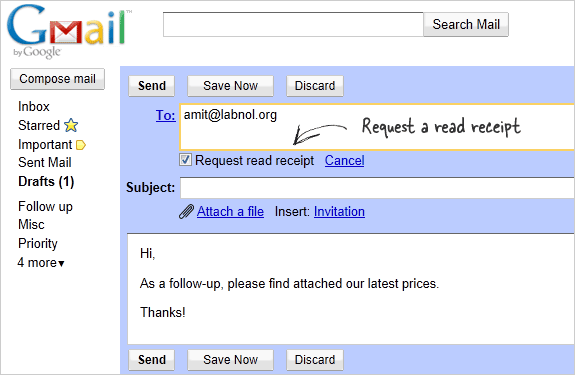
    Please stop requesting read receipts


    Why do people still request "read receipts" when sending emails? Does anyone actually say "yes" to these irritating pop up's when they ask you to send someone a notice that their email has been read? I receive over 100 non-spam emails every day and probably get 5 read-receipt requests per week on average. I have NEVER ONCE said yes to a read-receipt request. Not even on accident.

    You will get your "read receipt" when I am ready to reply to your email. 

    There is absolutely no reason you need to know on an individual email-by-email basis when someone has read an email. If you're an email marketer, try Constant Contact, Mail Chimp, or ExactTarget. It's not the 90s. If you're just sending personal emails to people, don't worry. Your email will be sent successfully (unless you're a spammer -- and if that's the case you've got other things to worry about). And I will read it within hours of you sending it.

    In fact, most people with smartphones (and over 300 million smartphones shipped last year) read emails within minutes of receiving it. And those who don't have push email notification systems (either on their computers, smartphones, or tablets) still check their email every 30-60 minutes. According to one poll, about 67% of people surveyed said they checked their email more than 6 times per day, and nearly 10% of those check email more than 40 times per day.

    So I am begging you people, please stop requesting read receipts!

    Monday, October 3, 2011

    Younglings, Yuengling, gather 'round


    Today is the day you can finally go to your corner store and buy a 6-pack of Yuengling beer in Ohio.

    No more special trips to that gas station just across the River. No more "fair" trade proposals for visiting friends from Pittsburgh. No more extra-large coolers for the sole purpose of stocking up on your annual vacations to the Finger Lakes. Just hop in your car and drive five miles down the road. Whenever you want. Wherever you want. You can get it on draft at the bar for dinner or buy a case for the party this weekend. Which also means...

    Today is also the day Yuengling isn't cool.

    Not cool like you need a koozie or frosted mug. Cool like "where did you get that?!" cool.

    Don't get me wrong, I'll probably drive through Geno's on the way home tonight. My fridge will be fully stocked for poker night. And I'm sure I'll have one in hand Saturday for the game. But come December, my extended-family Christmas list will not include a 6-pack of Yuengling Black & Tan. And I won't be saving that final bottle for a special occasion. But I will be on the hunt for elusive, seasonal, Great Lakes Christmas Ale.

    Which brings me to my point: Exclusivity is a rare offer today. It is something to be coveted and nurtured. Don't throw it away for expansion. Expansion that will devalue your product in the long run and leave you with nothing that distinguishes you from your competition. Embrace exclusivity. Cherish it. Promote it. Because come tomorrow, beer is beer, and you'll have nothing "special" left to offer.

    Saturday, October 1, 2011

    Extreme sales are born from extreme Missoni


    The Missoni at Target craze is just another example of why exclusivity is rare and valuable offer in the over-indulgent, instantly-gratified consumer world we live in today.

    Retail sales were actually way down in Q3 2011, but not at Target thanks to a high-end Italian designer named Missoni who created a special limited-edition of the zig-zagged line of items specifically for Target stores. Dresses that were typically $1,500 in New York were now on sale for $39.99 at Target stores across the country. But not for long.

    Stores sold out of many of the items in less than an hour as people, who had been waiting in line over night, ran through the stores grabbing anything and everything they could. The extreme high-levels of demand even crashed the Target.com online store, which was down for hours as their servers overloaded with web traffic from those "smart" enough to avoid the lines. It was big hit to say the least: Missoni Stampede at Target. And Target's 6-week supply disappeared in 1 day.

    "As a point of comparison, what we are really seeing today would compare to a Black Friday morning. So, the largest shopping day of the year," according to Dustee Jenkins, Target Vice President of Communications.

    The limited-edition Missoni line at Target not only drove interest, but also drove sales to unprecedented levels for a retail store. Just proof once again that something exclusive is something of value. Don't take it for granted. And promote the hell out of it. And Target successfully did just that.

    Thursday, September 22, 2011

    Six Ways to Better Market Yourself to Potential Employers


    In order to show employers that you’ve got what they want, you need emphasize your greatest assets and skills. The best way to do this by using websites, career profiles, and social networking profiles to tell employers about your background. And make sure you use strong, positive language that shows your achievements and strengths.

    These are the six major sections that employers are looking at:
    1. Academic Honors: If you’ve earned academic honors, don’t hesitate to list each and every one. Employers will be impressed with your hard work and smarts.
    2. Fellowships: Fellowships are usually merit-based and competitive, which shows a high level of achievement employers will appreciate.
    3. Scholarships: Being awarded a scholarship usually signifies that you outshone every other applicant by virtue of your achievements. Be sure to tell why you earned each scholarship so employers can get to know some of your strengths.
    4. Charitable Work / Volunteering: Now is not the time to be modest. If you’ve been involved in public service or charitable organizations, outline what you helped to accomplish. Many companies look for employees with a philanthropic bent.
    5. Clubs / Campus Organizations: List any clubs and organizations you’ve belonged to, from professional clubs to honor societies, and any leadership positions you’ve held within them. There is no limit to the number of clubs you can list, so your employers can get the full picture of your involvement on and off campus.
    6. Sports Participation: Many employers cite a candidate’s participation in sports as a positive influence in their decision to hire him or her. If you’ve developed skills such as leadership, teamwork, and endurance on the field, let employers know what you gained from the experience.

    For more information on how to GET FOUND and GET HIRED, check out www.globalfocus-u.com

    Monday, August 22, 2011

    #WelcomeToTwitter Trick


    I just stumbled upon a nifty little Twitter trick for all those marketers out there running multiple Twitter accounts in the same field or industry. You can now create a list of similar Twitter accounts and include #welcometotwitter in the description, and then when someone follows you they will also be recommended to follow the other accounts in your #welcometotwitter list. This is particularly helpful to help you grow a fledgling account if you have a similar account that is more mature and popular.

    Wednesday, August 17, 2011

    Marketing Meets Minority Report


    As I marketer, I found myself watching "Minority Report" the other day wishing marketing was capable of the advertisements Steven Spielberg, Philip Dick, and Scott Frank dreamed up in their futuristic world. Imagine what we could do with the hyper-personalized messages to passers-by in the airport or at the mall. ROIs would multiply ten-fold. And all the guessing that comes with audience, location, and interest would disappear. There is hope. The at-the-time unimaginable motion-controlled technology in the film is now widely available for a few hundred dollars with Microsoft's Kinect. I just hope I am lucky enough to be the marketer and not the marketee when it happens.